
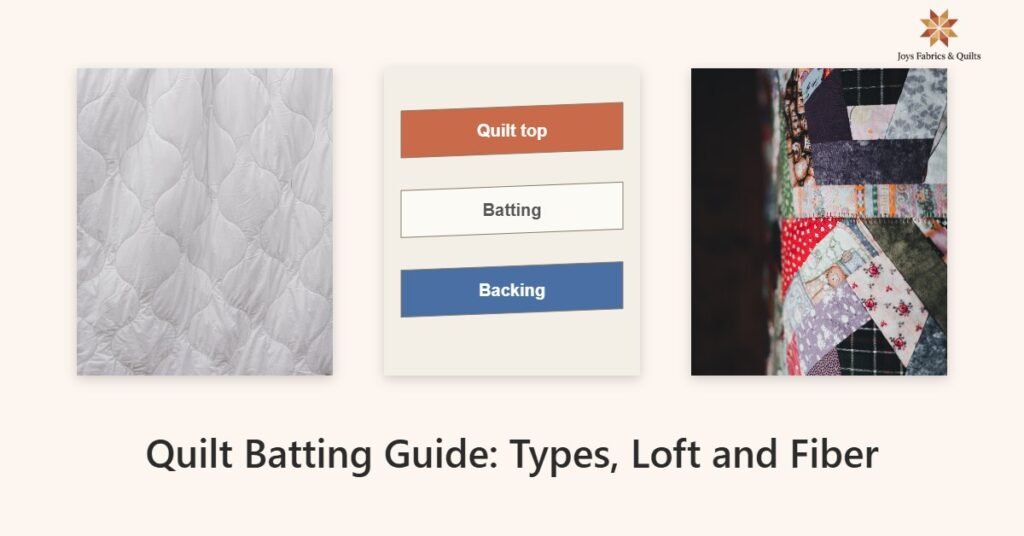
By Shariful Alam Pavel · Updated 26 November 2026
Quilt batting is the middle layer of a quilt, between the pieced top and the backing, and it decides how warm, heavy, flat or puffy the finished quilt feels. The main types are 100% cotton, 80/20 cotton-polyester blends, polyester, wool and bamboo blends. Each differs in loft, warmth, shrinkage, and how far apart you can space the quilting stitches. This guide compares the types, explains the terms on a batting package, and helps you choose the right batting for a bed quilt, a wall hanging or a baby quilt.
Key facts
- The five common types are cotton, 80/20 cotton-poly, polyester, wool and bamboo blends.
- 80/20 cotton-polyester is a popular all-round choice; Missouri Star uses it in its machine quilting department.
- Cotton and cotton blends usually shrink about 3 to 5 percent; polyester barely shrinks.
- Wool is light and warm, resists creasing, and is a favorite for show quilts.
- The package gives the maximum quilting distance, often 3 to 10 inches depending on the batting.
- Batting should be several inches larger than the quilt top on every side.
What batting does in a quilt
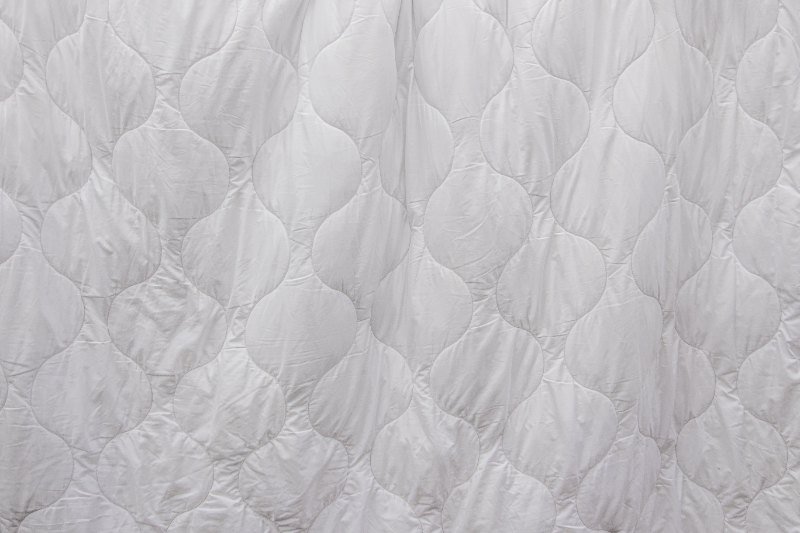
Batting adds warmth and body. It also shapes how the quilting looks. A thin, low-loft batting gives a flat, drapey quilt where the quilting reads as lines. A higher-loft batting puffs up between the stitches, so the quilting stands out in relief.
Three terms appear on almost every batting package:
- Loft. The thickness and puffiness. Low loft is flat; high loft is fluffy.
- Scrim. A thin stabilizing web that some battings are needle-punched onto. One batting guide notes that Warm & Natural, which has a scrim, is 87 percent cotton rather than 100 percent.
- Quilting distance. The maximum space between lines of stitching before the batting may shift or bunch. EE Schenck’s batting tips put the range at about 3 to 10 inches, depending on the type.
Quilt batting types compared
| Type | Loft | Warmth | Shrinkage | Best for |
|---|---|---|---|---|
| 100% cotton | Low | Warm, breathable | About 3 to 5% | Traditional, crinkly bed quilts |
| 80/20 cotton-poly | Low to medium | Warm | About 1 to 5%, by brand | Everyday quilts, beginners, machine quilting |
| Polyester | Medium to high | Warm, less breathable | Very little | Puffy or tied quilts, washable quilts |
| Wool | Medium to high | Warmest by weight | About 3 to 5% | Show quilts, hand quilting, quilts that get folded |
| Bamboo blends | Low to medium | Cool, breathable | Varies with the blend | Summer quilts, softer drape |
Shrinkage figures come from makers’ and retailers’ published guidance; check the package for each brand.
100% cotton
Cotton batting is breathable and gives the soft, crinkled look many quilters love after washing. It is usually low loft and often has a scrim. Retailers quoting The Warm Company say Warm & Natural can be quilted up to 10 inches apart and shrinks about 3 percent on the first wash.
80/20 cotton-polyester blend
An 80/20 blend combines cotton’s feel with polyester’s stability. Missouri Star says it drapes well, shrinks less than 100% cotton and is the batting its machine quilting department uses. Hobbs Heirloom 80/20 is a widely sold example. Many quilters find it the easiest to machine quilt.
Polyester
Polyester is fluffier and higher loft than most battings, WeAllSew notes, so it suits puffy quilts and tied quilts. Missouri Star says polyester barely shrinks.
Wool
Wool is light but warm, with a soft loft. Missouri Star says it makes hand quilting easy, shows off stitches and resists creasing, which makes it a favorite for show quilts and for quilts that are folded and stored. Wash wool batting gently, since it can felt if handled roughly.
Bamboo blends
Bamboo is usually blended with cotton or polyester. AccuQuilt notes that shrinkage is certain with bamboo, though less when blended with polyester, and that it needs gentle laundering.
How to choose quilt batting
Match the batting to how the quilt will be used:
- Bed quilt washed often. 80/20 or 100% cotton.
- Wall hanging or art quilt. A thin cotton or 80/20 that hangs flat. Wool also hangs well and resists creases.
- Heirloom or show quilt. Wool, for loft and crisp quilting definition.
- Puffy or tied quilt. Polyester.
- Summer quilt. A thin cotton or bamboo blend.
- Baby quilt. A washable cotton or 80/20. Remember that quilts stay out of the crib in the first year; see our baby quilt kits guide.
Check the quilting distance against your quilting plan. If you plan wide, open quilting, choose a batting rated for 8 to 10 inches.
What size batting do you need?
Batting should be larger than the quilt top so it does not come up short during quilting. Missouri Star lists batting sizes for each quilt size, such as 45 × 60 inches for a 36 × 52-inch crib quilt and 60 × 80 inches for a 50 × 65-inch throw. One longarm studio’s price list charges batting at the quilt’s width plus 8 inches, about 4 inches on each side, so check with your quilter before you buy.
Batting comes in packaged sizes, by the yard from a roll, or in wide widths. For a quilt back to match, see our guide to quilting fabric by the yard, which covers wide backing fabric.
Should you prewash batting?
Usually not. Many quilters leave batting unwashed so the finished quilt shrinks slightly on the first wash and takes on a soft, crinkled look. If you want a flat, modern finish or are mixing fabrics that shrink differently, follow the maker’s instructions for pre-shrinking. Some 100% cotton battings are sold as needing no prewashing.
Quilt batting questions
What is the best quilt batting for beginners?
An 80/20 cotton-polyester blend is a common choice. It is stable, easy to machine quilt and shrinks less than 100% cotton.
What is the warmest quilt batting?
Wool is usually the warmest for its weight, while staying light and breathable.
Does quilt batting shrink?
Cotton and cotton blends usually shrink about 3 to 5 percent on the first wash. Polyester barely shrinks.
How far apart can I quilt?
It depends on the batting. Check the package; ranges run from about 3 to 10 inches. Cotton battings with a scrim often allow up to 10 inches.
What does loft mean in batting?
Loft is the thickness and puffiness. Low-loft batting is flat; high-loft batting puffs up between the quilting stitches.
Your next step
Choose by use: 80/20 for everyday quilts, wool for show pieces, polyester for puffy ones. For the rest of the basic kit, see our quilting supplies list.