
Reviewed by Team Joy’s Fabrics · Updated 24 November 2026
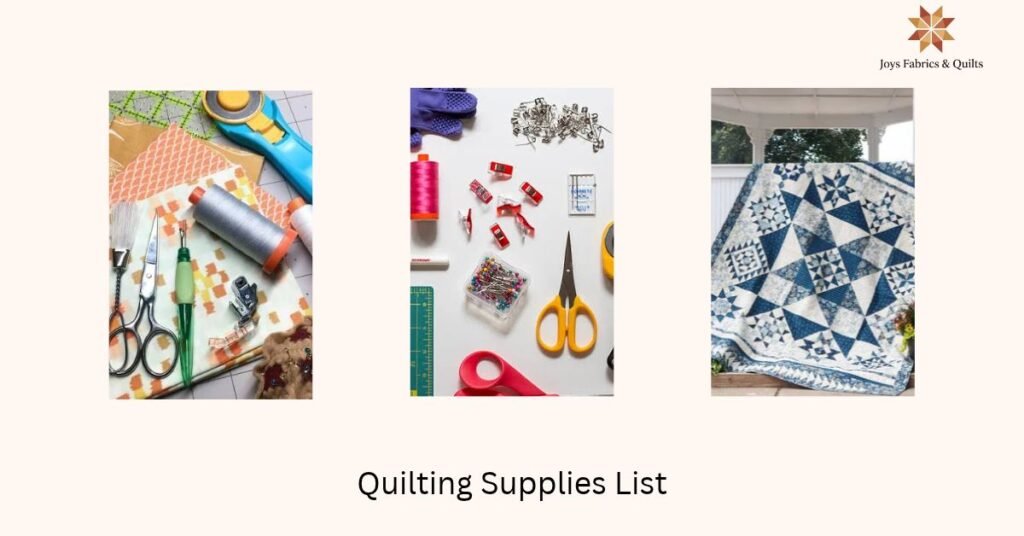
Walk into a quilt shop with a list and you will walk out with half the store. Most of it can wait. A first quilt needs a short list of tools, and the rest earns its place later, one project at a time. This list ranks every common quilting supply in the order you will need it: the three cutting tools first, then what you need to sew, then what you need to finish, then the extras that make quilting faster once you are hooked. Each tool has a note on what to look for, drawn from quilt shops, quilting teachers and our research, and a link to our full guide.
Key facts
- The three tools every quilter needs first are a rotary cutter, a self-healing cutting mat and a clear acrylic ruler.
- A 45mm rotary cutter is the size most teachers recommend for beginners.
- A 6 x 24 inch ruler and a cutting mat of at least 18 x 24 inches handle most cuts across folded fabric.
- 50 weight cotton thread is the most common choice for piecing; Missouri Star suggests 40 weight for machine quilting.
- 80/20 cotton-polyester batting shrinks about 1 to 3%, compared with 3 to 5% for 100% cotton, according to Missouri Star.

The quilting supplies list at a glance
Every common quilting tool, ranked by when you will need it. Rank 1 is what you buy before your first cut; rank 4 can wait until you know you love quilting.
| Rank | Tool | What to look for | Our guide |
|---|---|---|---|
| 1 | Rotary cutter | 45mm blade, blade guard, spare blades | Best rotary cutter for quilting |
| 1 | Self-healing cutting mat | At least 18 x 24 inches | Best self-healing cutting mat |
| 1 | Acrylic quilting ruler | 6 x 24 inches, marked every 1/8 inch | Best quilting rulers |
| 2 | Sewing machine | Straight stitch, a quarter-inch foot | Best sewing machine for quilting |
| 2 | Thread | 50 weight cotton for piecing | Best quilting thread |
| 2 | Pins or clips | Fine quilting pins, or clips for thick layers | Quilting pins and clips |
| 2 | Iron and pressing surface | Steam iron; a firm board or wool pressing mat | Best iron and wool pressing mat |
| 2 | Fabric scissors and seam ripper | One pair kept for fabric only | Quilting supplies for beginners |
| 3 | Batting | 80/20 or cotton for a first quilt | Quilt batting guide |
| 3 | Walking foot | Fits your machine model | Walking foot and quarter-inch foot guide |
| 3 | Basting pins or spray | Curved safety pins or a quilt basting spray | Basting spray for quilts |
| 3 | Marking tools | Removable fabric markers | Fabric marking pens and seam rippers |
| 4 | Square ruler | 6½ or 12½ inches, for trimming blocks | Square quilting rulers |
| 4 | Slotted ruler | For cutting many strips at once | Best slotted quilting rulers |
| 4 | Longarm or sit-down quilting machine | Throat space for the quilts you make | Longarm quilting machines buyer’s guide |
Buy rank 1 before your first cut and rank 2 before your first seam; ranks 3 and 4 can wait until you need them.
Rank 1: the three cutting tools
Quilting is cut, not snipped. Almost every quilt starts with straight strips and squares, and three tools cut them accurately: a rotary cutter, a self-healing mat and a clear acrylic ruler. Quilt shops and teachers agree on these three before anything else.
- Rotary cutter. A 45mm blade is the most versatile size and the usual starting point, according to Linda’s Electric Quilters and Singer. Buy spare blades with it.
- Self-healing cutting mat. Quilting Daily lists a mat of at least 18 x 24 inches as a basic supply. Some teachers prefer 24 x 36 inches if you cut from full yardage.
- Acrylic ruler. A 6 x 24 inch ruler spans folded quilting fabric, so you can cut strips across the width in one pass. Quilting Daily adds a 12 x 12 inch ruler for squares.
Our best rotary cutter for quilting, best self-healing cutting mat and best quilting rulers guides compare models, based on our research. Our guide to using a rotary cutter safely is worth reading before your first cut.
Rank 2: what you need to sew
Once the pieces are cut, you need a machine, thread, pins and an iron. Most quilters already own some of these.
- Sewing machine. A basic machine with a straight stitch is enough to piece a quilt. Mrs Quilty suggests looking for quilting features such as a quarter-inch foot. Our best sewing machine for quilting guide compares models for every budget.
- Thread. Missouri Star recommends keeping 50 weight thread for piecing and 40 weight for machine quilting. Lo and Behold Stitchery calls 50 weight cotton the most commonly recommended thread.
- Pins or clips. Fine pins hold seams for piecing; clips hold thick layers such as binding.
- Iron and pressing surface. Quilting Daily lists a steam iron with a non-stick soleplate.
- Scissors and a seam ripper. Quilting Daily suggests two pairs of scissors, one for fabric and one for paper and templates.
Rank 3: what you need to finish a quilt
A quilt top is not a quilt until it is layered, quilted and bound. These supplies finish the job.
- Batting. The middle layer. Missouri Star puts 80/20 cotton-polyester shrinkage at about 1 to 3% and 100% cotton at 3 to 5%, and uses 80/20 in its own machine quilting department. Polyester gives more loft; wool is the warmest.
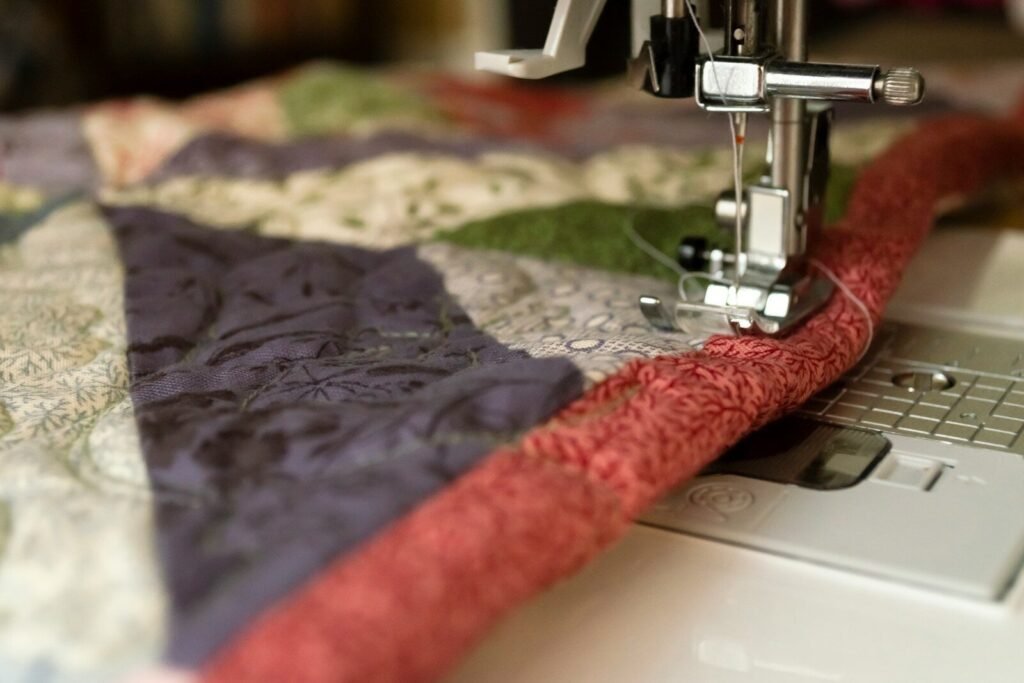
- Walking foot. It helps feed the quilt layers through the machine evenly; Madeira’s quilting guide suggests one when layers pucker.
- Basting supplies. Curved safety pins or a temporary basting spray hold the layers together before quilting.
- Marking tools. Removable markers show quilting lines that wash or wipe away.
| Batting | Shrinkage | Feel | Good for |
|---|---|---|---|
| 100% cotton | About 3 to 5% | Flat, crinkles when washed | Traditional bed quilts |
| 80/20 cotton-polyester | About 1 to 3% | Soft, holds its shape | Everyday quilts and first quilts |
| Polyester | Minimal | Higher loft, puffy | Tied or puffy quilts |
| Wool | Varies by brand | Warmest | Winter quilts and hand quilting |
An 80/20 blend shrinks less than 100% cotton and is the common all-round choice; wool is warmest, polyester puffiest.
The shrinkage figures come from Missouri Star; the loft and warmth notes from Linda’s Electric Quilters and Lo and Behold Stitchery. Our quilt batting guide covers loft, fiber and sizes in full.
Rank 4: tools worth adding later
These tools save time and improve accuracy once you have a few quilts behind you. None is needed for a first quilt.
- Square rulers for trimming blocks to an exact size, such as 6½ inches. Singer lists square-up rulers among the specialty rulers that make specific cuts faster.
- Slotted rulers for cutting many strips without moving the ruler, useful for strip-pieced designs such as bargello.
- Wool pressing mat for flat, firm pressing next to the machine.
- Longarm or sit-down quilting machine for quilting large quilts at home. Some quilt shops rent time on one; our renting a longarm guide explains how.
- Storage for rulers and fabric as your stash grows.
Hand quilting supplies
Hand quilting needs a different short list: a hoop or frame, quilting needles, a thimble and hand quilting thread. Our hand quilting supplies guide compares options, based on our research.
How to save money on quilting supplies
Three habits keep the list short and the spending sensible:
- Buy rank 1 well, and rank 4 later. The cutting tools are used on every quilt; specialty rulers are used on some.
- Use what you own. Any sewing machine with a straight stitch can piece a quilt; upgrade when you know what you want.
- Start with a kit. A kit puts the fabric and pattern in one box, so you buy tools, not fabric guesses. Joy’s Two-Fabric Bargello kit is $50 with free shipping in the USA, and our quilting supplies for beginners guide lists a full starter set.
Quilting supplies questions
What are the three most important quilting tools?
A rotary cutter, a self-healing cutting mat and a clear acrylic ruler. Together they cut fabric into accurate strips and squares, which almost every quilt pattern starts with.
What size rotary cutter should a beginner buy?
A 45mm rotary cutter. Quilting teachers and shops call it the most versatile size for cutting quilting cotton.
What size quilting ruler do I need first?
A 6 x 24 inch ruler. It spans folded quilting fabric, so you can cut strips across the width in one pass. Add a square ruler later for trimming blocks.
What thread is best for piecing a quilt?
50 weight cotton thread is the most common choice for piecing cotton quilts. Missouri Star suggests 40 weight for machine quilting.
What batting should I use for my first quilt?
An 80/20 cotton-polyester blend is a common choice. It shrinks less than 100% cotton, about 1 to 3% compared with 3 to 5%, and is easy to quilt through.
Your next step
Buy the three cutting tools, check your machine has a quarter-inch foot, and choose a simple first pattern. Our quilting supplies for beginners guide turns this list into a shopping plan, and our gifts for quilters guide sorts ideas by budget. If you want the fabric decided for you, call Joy at 817-223-8736 or use the contact page and ask for a Two-Fabric Bargello kit.
Every Tools and Supplies guide on this site
-
Best Quilting Rulers: Which Sizes You Need and the Rulers Worth Buying
-
Best Sewing Machine for Quilting: What Matters and Researched Picks
-
Gifts for Quilters: Ideas by Budget, From Fabric to Tools
-
Quilt Batting Guide: Types, Loft and Fiber Compared
-
Quilting Supplies for Beginners: What to Buy First, Later, or Skip