

By Shariful Alam Pavel · Updated 26 November 2026
A beginner needs fewer quilting supplies than most starter lists suggest. For a first quilt, buy a rotary cutter, a self-healing mat, a long acrylic ruler, cotton thread, pins or clips, and fabric, then use the sewing machine, iron and scissors you may already own. Add batting, backing and binding when the top is done, and leave specialty rulers and gadgets until a project calls for them. Team Joy’s Fabrics researched this list from quilting guides and makers’ details; we have not tested the tools. This guide splits beginning quilting supplies into buy now, buy later and skip for now.
Key facts
- The three cutting tools come first: rotary cutter, self-healing mat and a 6 × 24 or 6½ × 24½-inch ruler.
- A sewing machine with a straight stitch and a ¼-inch foot is enough for a first quilt.
- Batting, backing and binding fabric are needed only once the top is finished.
- A walking foot helps when you quilt the layers on a home machine.
- Specialty rulers, die cutters and gadgets can wait until a pattern needs them.
- Joy’s Two-Fabric Bargello kit includes the pattern and top fabric, but not tools, batting or backing.
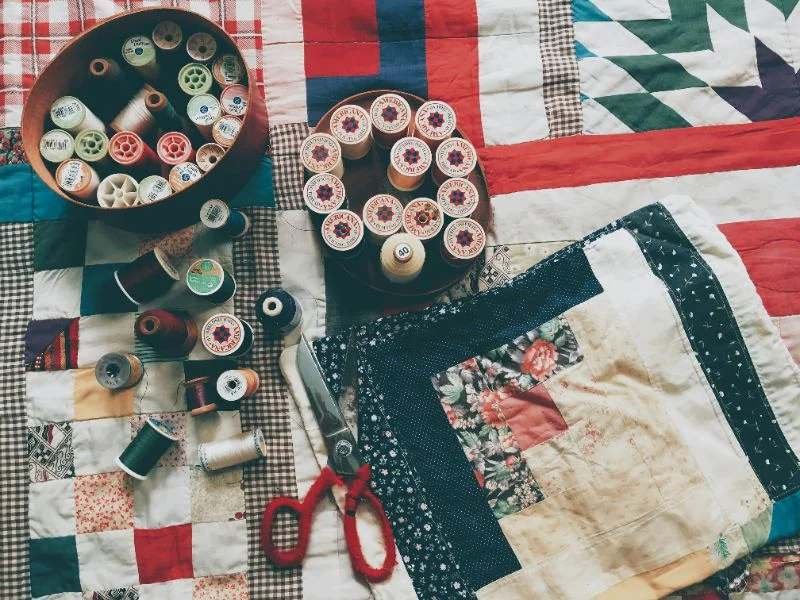
Buy now: supplies for your first quilt top
| Supply | Why you need it | Tip |
|---|---|---|
| Rotary cutter, 45 mm | Cuts straight strips through several layers | Buy a spare blade |
| Self-healing mat, about 18 × 24 in or larger | Protects the table and the blade | Larger mats fit folded fabric |
| Acrylic ruler, 6 × 24 or 6½ × 24½ in | Guides the cutter for straight, measured cuts | See our best quilting rulers guide |
| Sewing machine with a ¼-inch foot | Sews accurate quilting seams | A basic machine is fine |
| Cotton thread in a neutral color | Pieces any fabric without showing | Gray or beige blends with most colors |
| Pins or clips | Hold seams and points in place | Fine pins slide through cotton easily |
| Seam ripper | Fixes the mistakes every quilter makes | Keep it by the machine |
| Iron and ironing surface | Presses seams flat for accuracy | Press, do not push the iron |
| Fabric | The quilt itself | A kit or precuts take the guesswork out |
These are the supplies most beginner quilting guides agree on for a first quilt top.
If you already sew, you likely own the machine, thread, pins, seam ripper and iron. That leaves the three cutting tools as your main purchase.
Buy later: supplies for finishing the quilt
Once the top is pieced, you need the rest of the quilt sandwich and a way to stitch it:
- Batting. The middle layer. An 80/20 cotton-polyester blend is a common beginner choice. Our quilt batting guide compares the types.
- Backing fabric. Larger than the top. Wide backing fabric avoids a seam. Our guide to quilting fabric by the yard explains widths.
- Binding fabric. Strips that finish the edges.
- Basting supplies. Curved safety pins or basting spray to hold the layers.
- A walking foot. Feeds all three layers evenly for straight-line quilting on a home machine.
- Quilting gloves. Help you grip and move the quilt.
If you plan to send the top to a longarm quilter, you may not need the basting supplies or walking foot at all.
Skip for now: supplies that can wait
Beginners often overbuy. These can wait until a project needs them:
- Specialty rulers. Triangle, flying geese and curve rulers serve specific shapes.
- Slotted rulers. Fast for many strips, but larger and costlier. Useful later for strip-heavy quilts such as bargello.
- Fabric die cutters. Handy for repeated shapes but a big purchase.
- A large fabric stash. Buy fabric for each project until you know what you like.
- A new machine. Learn on the one you have, then upgrade knowing what you need. Our guide to the best sewing machine for quilting covers what matters.
How to save money on beginning quilting supplies
- Borrow first. Guild members and friends often lend a cutter or ruler so you can try it.
- Buy a kit. A kit supplies matched fabric and a pattern, which removes guesswork and extra fabric purchases.
- Choose one good ruler. A single long ruler does most of the work for a first quilt.
- Use what you have. Your household iron and scissors work fine to start.
- Keep blades sharp. A dull blade wastes fabric and time; replace it when it skips threads.
A simple first-quilt plan
- Buy the three cutting tools and a kit or precut bundle.
- Make a small quilt of squares or strips to practice cutting and the ¼-inch seam.
- Buy batting, backing and binding when the top is done.
- Quilt it with a walking foot in straight lines, or send it to a longarm quilter.
- Add new tools only when your second project needs them.
Our how to quilt for beginners guide walks through each step, and the quilting supplies list ranks every tool in more detail.
Beginning quilting supplies questions
What supplies do I need to start quilting?
A rotary cutter, self-healing mat, long acrylic ruler, sewing machine with a ¼-inch foot, cotton thread, pins, a seam ripper, an iron and fabric.
What is the most important quilting tool for a beginner?
The long acrylic ruler with a rotary cutter and mat. Accurate cutting makes every later step easier.
Do I need a special sewing machine to start quilting?
No. A machine with a good straight stitch and a ¼-inch foot is enough for a first quilt.
When do I need batting and backing?
After the quilt top is finished. Buy them when you are ready to make the quilt sandwich.
Does Joy’s Two-Fabric Bargello kit include tools?
No. The kit includes the pattern and the fabric for the quilt top. You supply the tools, batting and backing.
Your next step
Buy the three cutting tools, choose a simple first project, and add the rest as you go. When you want a striking second quilt, see Joy’s Two-Fabric Bargello quilt pattern or call 817-223-8736.